Industrial heat pump case studies in India: four installed projects, and how to check the numbers
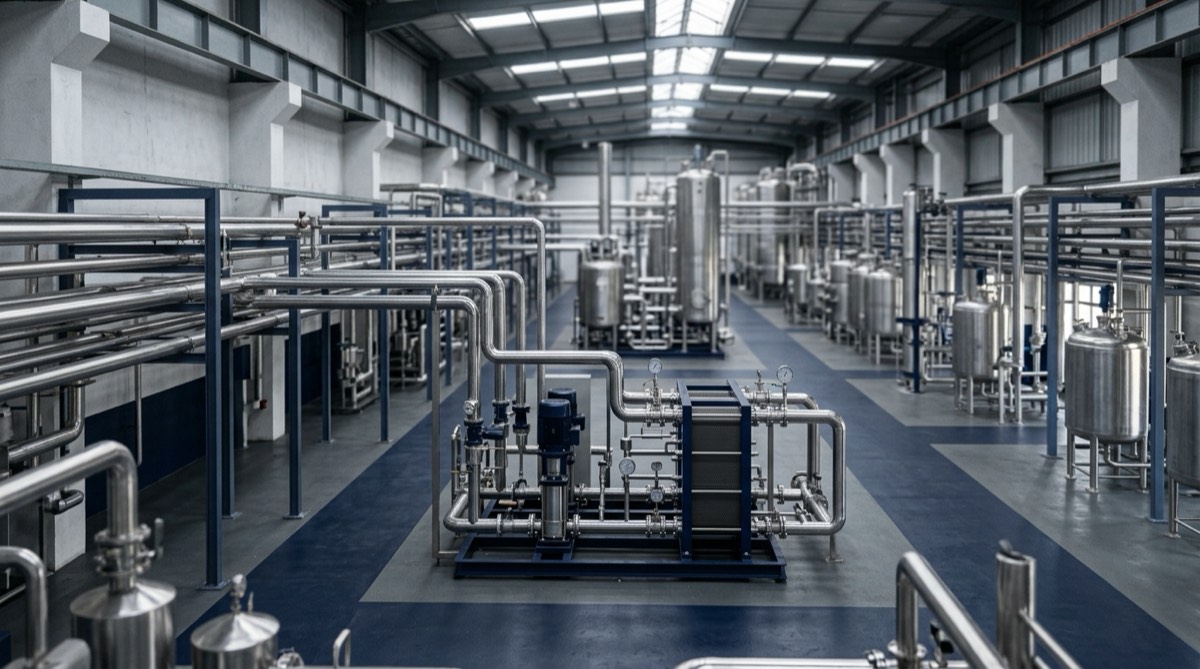
Tetra Heat Pump, a product of Promethean Energy Private Limited, has more than 200 installations in service. Four of them are summarised below: a 1.5 MW paint shop installation in automotive, a 900 kW dairy installation with heat recovery, an 800 kW pharmaceutical API installation, and a central hot water plant serving a 200-room resort. None of the four plants is named, because large industrial buyers rarely give a supplier permission to use their name, and the name is the only fact withheld. The figures are the manufacturer's own records, and the section below on checking a saving sets out what a reader should ask of them, and of any vendor's.
Installed industrial heat pump projects in India
What is withheld is the identity: the company name, the brand, the plant name and the address. What is published is the sector and sub-sector, the plant scale, the capacity installed, the duty it serves and the result recorded. An anonymised study is not a vague one. It is a study missing exactly one of its facts, and the rest still have to survive a reader who checks.
A 1.5 MW heat pump installation on an automotive paint shop pre-treatment line
1.5 MW installation, multiple units
- Energy cost reduction
- 65%
- CO2 avoided
- 400 t per year
- Payback
- 18 months
A 900 kW heat pump on an Indian dairy: the hot water loop, not the milk
900 kW with heat recovery
- Energy saving, this plant
- 75%
- Duty moved
- 85 to 90°C hot water loop
- Heat source
- Refrigeration condenser rejection
How a 200-room resort cut its heating cost by 70% with an industrial heat pump
200-room property
- Heating cost reduction
- 70%
- CO2 avoided
- 250 t per year
An 800 kW heat pump at an API plant, tied in outside the classified perimeter
800 kW installation
- Energy saving
- 70%
- Supply temperature control
- ±0.5°C
- CO2 avoided
- 300 t per year
Two things in those four summaries are deliberate. Where a figure is absent, it has not been confirmed to the standard set out in the next section, and it is left out rather than estimated. And the dairy's 75% sits above the 40 to 70% range Tetra Heat Pump publishes for the fuels it displaces, which is not a contradiction: the range is what the product does in general, and 75% is what one plant measured. A result on a single installation may beat a typical range. A headline claim may not. The 1.5 MW paint shop figure is an installation rather than a machine, because the largest single unit built is 1,450 kW.
How to check a heat pump saving, including ours
A savings percentage is a ratio between two costs, and it is only as good as the two numbers under it. No industrial heat pump supplier in India currently publishes those numbers, or the method used to arrive at them, so a buyer holding three quotations is comparing three pieces of marketing. These are the questions to put to us, and to everyone else.
| What to ask | Why it decides the answer | What these four state today |
|---|---|---|
| Which fuel was displaced, at what price, on what date | The saving moves with the fuel price. Industrial PNG in Gujarat was ₹68 per SCM in June 2026 against ₹44.68 per SCM in Morbi in July 2024 | The fuel is not stated |
| Measured consumption before the retrofit, in physical units | A percentage with no metered denominator cannot be checked by anybody, including the plant that bought it | Not published |
| The output temperature of the duty, and the COP measured at it | COP is a function of lift. Water source units reach COP 4.5 to 5.2 at 60°C output, while independently measured performance in Indian conditions is about 2.26 at 110°C output and about 2.0 at 120°C | The pharmaceutical plant holds ±0.5°C. Output temperature and measured COP are not published |
| The electricity tariff used, and whether it is landed or the energy charge alone | Gujarat HT-I is ₹4.30 per unit on the energy charge and ₹7.50 to ₹8.50 landed once surcharges, demand charges and duty are added. Which one was used changes the result | Not published |
| The emission factor behind the CO2 tonnage | A tonnage with no factor beside it cannot be reproduced from the plant's own meter readings | Not published |
| Who measured it, over what period, and who signed it off | It is what separates a metered result from a supplier's estimate | Not published |
That last column is where this library currently stops. The four results come from commissioned plant, and on this page they are not yet supported by a metered baseline, a stated tariff or a named sign-off. Publishing the questions before all of them can be answered is deliberate. A study that later arrives carrying the whole column is worth something; one claiming a method it never had is the first thing a competent energy manager takes apart.
What the projects have in common
Each was a low-temperature duty running on an expensive fuel for enough hours a year to pay back plant. Three tests decide whether a site looks like these four.
- 1
The temperature test comes first. Tetra Heat Pump builds air source, water source and cascade units delivering continuous output up to 120°C with ±0.5°C control, in single machines up to 1,450 kW and multi-unit projects up to 5 MW. Under that ceiling sit wash and pretreatment baths, clean-in-place circuits, pasteurisation hot water loops, guest hot water and laundry, and jacketed vessels on aqueous duties. Over it sit the loads that rule themselves out: curing and drying ovens, sterilisation steam at 121 to 134°C, spray dryer inlets at 180 to 200°C, and alkyd polycondensation held at 200 to 220°C. Those stay on the existing plant, and a retrofit sold as covering them will not commission. There is more on the equipment envelope and how it integrates if the duty is near the limit.
- 2
The fuel test decides the economics. A heat pump displacing PNG, LPG, furnace oil, LDO or diesel needs a COP of only 1.0 to 1.2 to match the incumbent on running cost, which any working machine clears, and that is the band in which savings of 40 to 70% apply. Against coal or biomass the same calculation lands between 3.3 and 6.5, which a 120°C machine does not reach. On a solid-fuel site the reason to switch is compliance, air quality, labour and customer audit, and it is not cost. Saying so before the order beats discovering it afterwards, and the switch narratives from plants that lost gas supply show how differently the decision runs by fuel.
- 3
The third test is hours. The saving accrues per hour of operation, so a duty running most days of the year reaches a payback a promoter will sign and a seasonal one does not, whatever the fuel price. That pattern holds across the industries served.
Is your plant a fit?
Three inputs settle it. The output temperature of the duty you want to move, the fuel you burn now with its contracted price, and your landed electricity tariff. Divide the tariff by the delivered cost of a useful kilowatt-hour of heat from that fuel, and if the answer is below the COP achievable at your output temperature, the switch pays on running cost alone. The calculator does that arithmetic, and the manufacturer page covers configurations, refrigerants including R1234ze and R245fa, and BMS, SCADA and PLC integration. If the arithmetic works out, the next step is a look at your load profile rather than a quotation, which you can start here.
Frequently asked questions
- Why are the customers in these case studies not named?
- Large industrial buyers rarely grant a supplier permission to publish their name, and Tetra Heat Pump does not publish a customer's identity without it. The name is the only fact withheld. The sector and sub-sector, the plant scale, the capacity installed, the duty it serves and the result recorded are all published.
- Which Indian factories have installed industrial heat pumps?
- Tetra Heat Pump, a product of Promethean Energy Private Limited, has more than 200 installations in service. Four are summarised on this page: a 1.5 MW automotive paint shop installation, a 900 kW dairy installation with heat recovery, an 800 kW pharmaceutical API installation, and a central hot water plant serving a 200-room resort. The plants are anonymised at the customers' request.
- How should I check a savings percentage from a heat pump vendor?
- Ask six things. Which fuel was displaced, at what price and on what date. The measured consumption before the retrofit, in physical units. The output temperature of the duty and the COP measured at it. The electricity tariff used, and whether it is the landed rate or the energy charge alone. The emission factor behind any CO2 tonnage. And who measured the result, over what period, and who signed it off. A percentage without those six is not checkable by anyone.
- Do industrial heat pumps save money against coal?
- Generally not on running cost. Against PNG, LPG, furnace oil, LDO and diesel a heat pump needs a COP of only 1.0 to 1.2 to match the incumbent, which is the band where savings of 40 to 70% apply. Against coal or biomass the same calculation lands between 3.3 and 6.5, above what a 120°C machine reaches. On a coal-fired site the reason to switch is compliance, air quality, labour and customer audit, not cost.
Check the arithmetic for your own duty
Your duty temperature, the fuel you burn now and your landed electricity tariff are all it takes.