An 800 kW heat pump at an API plant, tied in outside the classified perimeter
Outcome
- Sector
- Pharmaceutical, API
- Load
- 800 kW installation
An Indian manufacturer of active pharmaceutical ingredients moved its low-temperature process heat onto an 800 kW Tetra Heat Pump installation, sited outside the classified perimeter so that no qualified utility was modified. The system holds supply temperature to ±0.5°C, the energy saving on the converted load is 70%, and the change avoids 300 tonnes of CO2 a year. Sterilisation in place and autoclaving at 121 to 134°C, and the water for injection still, run on pure steam and were left alone.
Why the tie-in sat outside the classified perimeter
The objection raised in a pharmaceutical plant is about GMP change control rather than about efficiency.
Modify a qualified utility and requalification comes into scope: documentation, a validation exercise and production time the site does not have. So the saving gets left on the table.
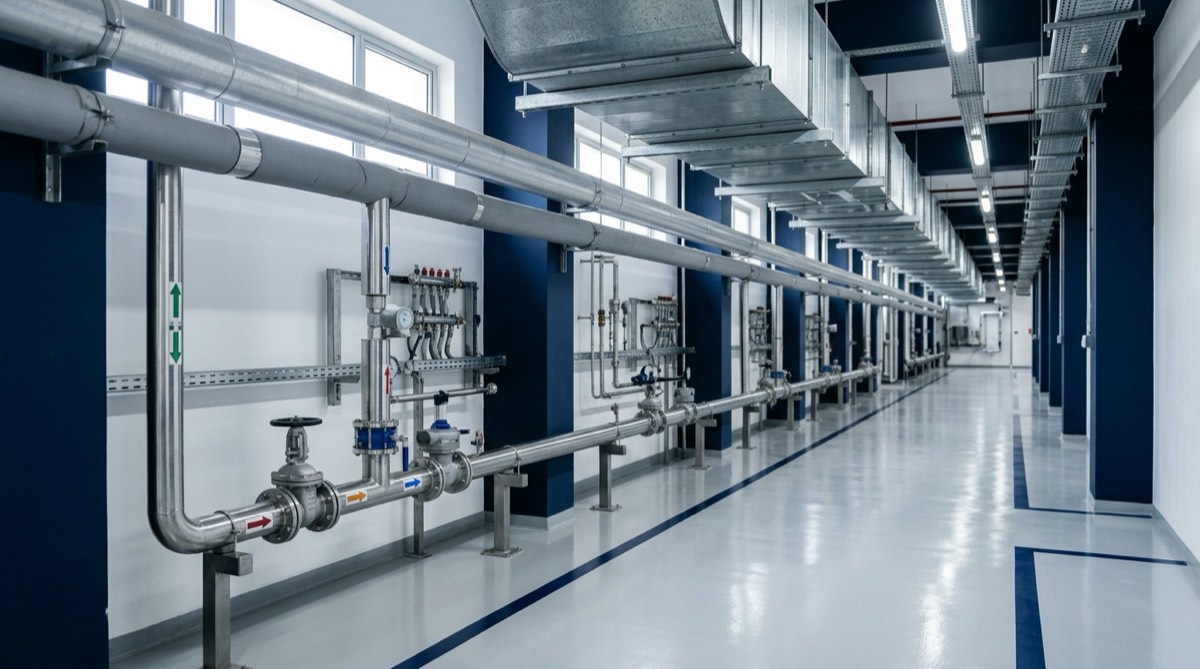
The way through is architectural. The heat pump was installed in the utility block, outside the classified area, feeding hot water distribution that was already there. Nothing downstream of the tie-in changed: the same air handling coils, the same clean-in-place skid, the same loop heat exchangers, all still qualified. What changed is the machine heating the water arriving at them, which keeps the work inside engineering change control rather than pulling the classified area into a requalification.
A hot water circuit below 100°C is also outside the Indian Boiler Regulations, so the certified attendant on every shift and the annual inspection shutdown do not come with it.
Which loads the 800 kW covers, and which it does not
| Load | Temperature | On the heat pump |
|---|---|---|
| HVAC reheat after dehumidification | Continuous, set by the room condition | Yes |
| Clean-in-place | To 100°C | Yes |
| Purified water and WFI loop sanitisation | 80 to 95°C | Yes |
| Fluid bed drying | 60 to 80°C | Yes |
| Sterilisation in place and autoclaving | 121 to 134°C, pure steam | No |
| Water for injection multi-effect still | Above the range | No |
Reheat after dehumidification is the largest single low-temperature heat load in an Indian pharmaceutical plant, and the one most often left out of a heat recovery scope. Air is cooled below dew point to dry it, then warmed back to the room condition, every occupied hour. It is a continuous, moderate-temperature, water-side load, the profile a heat pump serves best, and it is usually met by a boiler raising steam far hotter than the coil needs.
Tetra Heat Pump units hold supply temperature to ±0.5°C and deliver continuous output up to 120°C, which covers reheat, clean-in-place, loop sanitisation and fluid bed drying, and none of the pure steam duties. The tolerance earns its keep on reheat, where the coil trims a room to a specified condition rather than filling a tank, and drift shows up in the environmental record before it shows up in the energy bill.
What was installed
800 kW, in the utility block, on the water side. Single-unit capacity runs to 1,450 kW, so this duty sits inside one machine rather than a bank of them. Tetra Heat Pump, a product of Promethean Energy Private Limited, builds air source, water source and cascade configurations, on refrigerants including R1234ze and R245fa.
Controls integrate to existing building management, SCADA and PLC networks, including Siemens and Allen-Bradley, over Modbus and BACnet, so supply temperature is a trend QA can pull rather than a local display nobody reads.
One thing to budget early: moving heat from fuel to electricity raises the sanctioned load, and the security deposit is recalculated against the higher average bill at the next revision.
What the 70% covers
The saving is on the converted load, not on the plant’s whole energy bill. The boiler is retained for pure steam, so what falls is its firing hours.
The wider arithmetic is set by the fuel displaced rather than by the industry. Against piped natural gas, LPG, furnace oil, light diesel oil and diesel the breakeven coefficient of performance is 1.0 to 1.2, so almost any working machine is cheaper to run. Against coal or biomass briquette that is not true: the cost case does not hold, and the reasons to change are compliance, air quality, labour and customer audit. A pharmaceutical site running solid fuel should be evaluated on that basis, not on a savings percentage.
The qualification pack
This is what a utility change of this kind generates, and it is also what QA will ask for in the very first meeting.
| Document or activity | What it demonstrates | Who reviews it |
|---|---|---|
| Engineering change control record | The change is bounded and the classified area is untouched | QA and plant engineering |
| Marked-up utility drawing and tie-in detail | Where new plant meets existing distribution, and that no qualified equipment is modified | Plant engineering and validation |
| Installation and operational checks at handover | The unit is installed as designed and operates across its stated range | Validation and utilities |
| Supply temperature record against setpoint | The duty is held to ±0.5°C in service | Validation and QA |
| Instrument calibration certificates | The temperature and flow instruments reading the duty are traceable | QA |
| Revised operating and maintenance procedures, with training records | The utilities team can run the plant to a documented method | QA and utilities |
Where a project requires certification of the equipment itself, Promethean Energy obtains it for that project, to the standard the site sets, as it has on previous projects.
What to settle before the order
Agree the change control route with QA before the specification is frozen, because that answer decides where the tie-in goes and the tie-in decides the capacity. And scope the reheat load with the dehumidification duty in front of you: it runs whenever the plant is occupied, so it sets the running hours.
Working out whether your plant is a fit
The screening question is which loads sit below 100°C and what is heating them now. There is more on sector loads on the pharmaceutical industry page, on the equipment at high temperature heat pumps, and on tie-ins and controls at integration. Chemical processing scopes the same way. The calculator turns your tariff and fuel rate into a breakeven; other projects sit on the case studies page.
Frequently asked questions
- Does installing a heat pump in a pharmaceutical plant trigger requalification?
- No, not if the tie-in sits outside the classified perimeter. Where the heat pump makes hot water in the utility block and feeds distribution that already exists, the qualified equipment downstream is unchanged and the work stays inside engineering change control. It is touching a qualified utility that pulls requalification into scope, which is why the first project should be scoped to avoid it.
- Which pharmaceutical loads can an industrial heat pump serve?
- HVAC reheat after dehumidification, clean-in-place to 100°C, purified water and water for injection loop sanitisation at 80 to 95°C, and fluid bed drying at 60 to 80°C. Sterilisation in place and autoclaving at 121 to 134°C run on pure steam and are out of range, as is the water for injection multi-effect still.
- How much energy does a heat pump save at a pharmaceutical plant?
- On this 800 kW installation the saving on the converted load is 70%. The general case is set by the fuel displaced: against piped natural gas, LPG, furnace oil, light diesel oil and diesel the breakeven coefficient of performance is 1.0 to 1.2, so almost any working machine is cheaper to run. Against coal or biomass briquette the cost case does not hold and the reasons to change are different.
- How tightly can a heat pump hold process temperature?
- Tetra Heat Pump units hold supply temperature to ±0.5°C. That matters most on HVAC reheat after dehumidification, where the coil is trimming a room to a specified condition rather than simply raising a tank.
- Does the steam boiler come out?
- No. Pure steam duties stay on the existing plant, so the boiler is retained and its firing hours fall. A pharmaceutical heat pump project is a partial conversion by design, and any proposal that removes the boiler entirely should be read carefully.
Is your plant a fit?
The output temperature of the duty you want to move, the fuel you burn now and your landed electricity tariff decide it.