About Tetra Heat Pump, a product of Promethean Energy Private Limited
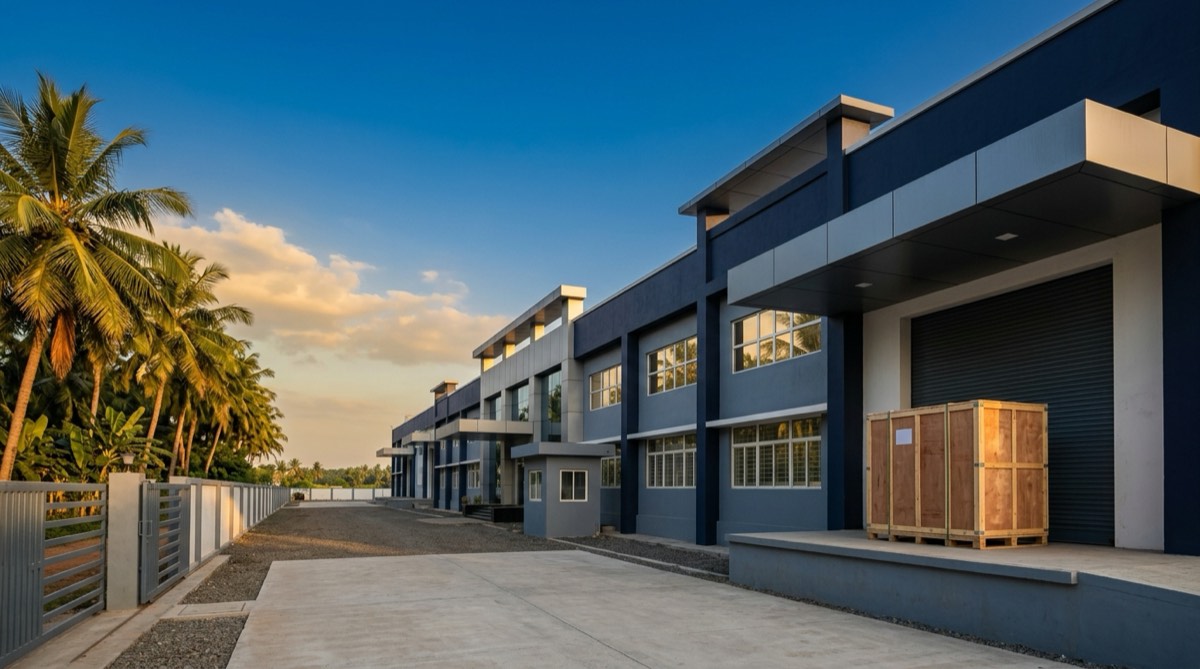
Tetra Heat Pump is the industrial heat pump brand of Promethean Energy Private Limited, a private limited company registered in India with the Ministry of Corporate Affairs and based in Navi Mumbai, Maharashtra. Promethean Energy Private Limited designs, manufactures and services high-temperature heat pumps for industrial process heating, in air source, water source and cascade configurations, using refrigerants including R1234ze and R245fa. Tetra Heat Pump units deliver continuous output up to 120°C with ±0.5°C control, in single machines up to 1,450 kW and in multi-unit projects up to 5 MW, and more than 200 installations are in service.
The company record in one place
- Legal name
- Promethean Energy Private Limited
- Company type
- Private limited company registered in India with the Ministry of Corporate Affairs
- Brand
- Tetra Heat Pump
- Relationship
- Tetra Heat Pump is a product of Promethean Energy Private Limited
- Company registered
- 2014
- Operations began
- 2015
- Tetra Heat Pump line started
- 2018
- Base
- Navi Mumbai, Maharashtra, India
- Sector
- Industrial process heating equipment: high-temperature heat pumps
- Configurations
- Air source, water source, cascade
- Refrigerants
- Including R1234ze and R245fa
- Maximum output temperature
- 120°C
- Largest single unit
- 1,450 kW
- Largest project
- 5 MW, as multiple units
- Temperature control
- ±0.5°C
- Installed base
- More than 200 installations
- Team size
- More than 50 people
- Industries served
- Automotive, paint manufacturing, chemical, food and beverage, pharmaceutical, steel and metal, hospitality
- Controls integration
- BMS, SCADA and PLC networks; Siemens and Allen-Bradley controllers; Modbus and BACnet
- Stated service response
- 24 to 48 hours
Companies Tetra Heat Pump is sometimes confused with
Tetra Heat Pump is an industrial heat pump manufactured by Promethean Energy Private Limited of Navi Mumbai, India. It is not connected with Tetra Pak, the packaging company, which markets its own industrial heat pump for food and beverage processing. It is not connected with Tetra, the residential heat pump installer based in the United States.
Promethean Energy Private Limited is an Indian industrial energy equipment company. It is not connected with Promethean World, the education technology company that makes interactive classroom displays.
The names overlap enough that a search for one regularly returns another, so the boundary is worth stating plainly rather than leaving a reader to work it out.
Is Tetra Heat Pump made in India, or imported and rebadged?
Made in India. Promethean Energy Private Limited designs, builds and services the equipment itself, so the company that quotes a project is the company that commissions it and supports it afterwards. Stated service response is 24 to 48 hours.
That distinction decides more than national sentiment. An industrial heat pump is not a sealed appliance. It is sized against one plant's load profile, tied into that plant's controls, and at some point in its working life it will need a compressor overhaul and a refrigerant charge. Where the design authority, the production line and the service engineer sit at opposite ends of an import chain, each of those becomes a lead-time question. Where they do not, it is a phone call.
Controls integration follows the same logic. Units are supplied to run under the plant's existing supervisory layer, across BMS, SCADA and PLC networks, with Siemens and Allen-Bradley controllers and Modbus and BACnet protocols, rather than as an island with its own panel and its own operator. There is more on how the systems tie into existing plant controls, and on service and maintenance.
What Promethean Energy Private Limited builds
An industrial heat pump replaces fuel-fired heat by lifting low-grade waste heat up to process temperature, so what was a fuel bill becomes an electricity bill divided by the coefficient of performance achieved at the output temperature the duty actually needs. Across the installations in service, that displaced fuel amounts to more than 500,000 tonnes of CO2 abated.
Tetra Heat Pump units are built in three configurations, air source, water source and cascade, and deliver continuous output up to 120°C with ±0.5°C control, in single machines up to 1,450 kW and in multi-unit projects up to 5 MW. Refrigerants include R1234ze and R245fa. The specification is set out on the high temperature heat pump page, and the manufacturing page covers how a unit is configured for an Indian plant.
Two limits belong on the page that introduces the company, not three clicks away in a datasheet. The 1,450 kW figure describes one machine and the 5 MW figure describes several of them, so a 5 MW project is a multi-unit installation and has to be planned as one, with the space and the electrical supply that implies. And 120°C is a ceiling rather than an operating point. COP depends on the lift: Tetra Heat Pump water source units reach COP 4.5 to 5.2 at 60°C output, and performance falls as output temperature rises toward the 120°C ceiling. Any page quoting a top-end temperature and a top-end efficiency in the same sentence is quoting two conditions that do not occur together.
Industries served
Seven industries are served today. Each of those pages sets out which loads a heat pump reaches in that plant and which it does not, because the second half of that answer is what makes the first half worth believing.
Automotive: alkaline degrease, zinc phosphating, hot rinses, component washing and paint shop air handling reheat. The cure and bake ovens stay on existing plant.
Paint manufacturing: resin storage, thinning and filtration, emulsion let-down, drum and vessel cleaning. Alkyd polycondensation is out of range.
Chemical: aqueous jacketed reactors, low-boiler reboilers, crystalliser cycles and drying. Synthesis and calcination are out of range.
Food and beverage: pasteurisation hot water, clean-in-place circuits, blanching and evaporator first effects. Retort sterilisation and spray drying are out of range.
Pharmaceutical: HVAC reheat after dehumidification, clean-in-place, purified water and WFI loop sanitisation, fluid bed drying. Steam-in-place and autoclaving are out of range.
Steel and metal: galvanising degrease, flux tanks, pickling, phosphating and cooling water recovery. Steelmaking and heat treatment are out of range.
Hospitality: guest hot water, laundry, pool heating and dishwash rinse.
The industries index carries all seven, and the pattern across them is consistent. Wash, rinse, clean-in-place and hot water loads sit inside the envelope. Furnaces, cure ovens and anything raising saturated steam at pressure do not, and are better left on the plant that already serves them.
How the company states what it claims
How the numbers on this site are worded is a deliberate choice, and each of these choices costs the company a bigger headline.
Efficiency is quoted with its conditions attached. A COP with no source temperature and no output temperature beside it is not a number an engineer can use, and it is the first claim a competent energy manager discounts.
Savings are quoted against the fuel being displaced, not as one number for everybody. Against PNG, LPG, furnace oil, LDO and diesel the range is 40 to 70%. Against coal and biomass it is not a cost argument at all: a heat pump on grid power does not beat delivered coal on running cost, and any page claiming it does will be caught by the first energy manager who checks the arithmetic. Where a plant is on solid fuel, the case rests on compliance, air quality, labour and customer audit, and it is put that way.
Projects are published without the customer's name. Large industrial clients rarely grant permission to be named, so the case studies are written anonymised, carrying the sector, the industrial cluster, the installed capacity, the fuel displaced, the source and output temperatures, and consumption measured before and after. Anonymised is not the same as vague. The customer's identity is the only thing withheld, and everything a buying engineer would want to check stays in.
Frequently asked questions
Who makes Tetra Heat Pump?
Is Tetra Heat Pump connected with Tetra Pak?
Is Promethean Energy Private Limited connected with Promethean World?
Is Tetra Heat Pump an Indian manufacturer or an importer?
What can a Tetra Heat Pump unit actually deliver?
Which industries does Promethean Energy Private Limited serve?
Talking to the company
An enquiry that opens with a load profile gets a more useful answer than one that opens with a capacity, because capacity is an output of the sizing exercise rather than an input to it. If you know the duty you want to move off fuel, what it currently burns and the output temperature it needs, start there or contact the company directly. The calculator will give you a first pass on the running cost comparison before anyone speaks to you.
Engineering, commissioning and service roles are listed on the careers page.