A 900 kW heat pump on an Indian dairy: the hot water loop, not the milk
Outcome
- Sector
- Dairy processing
- Load
- 900 kW with heat recovery
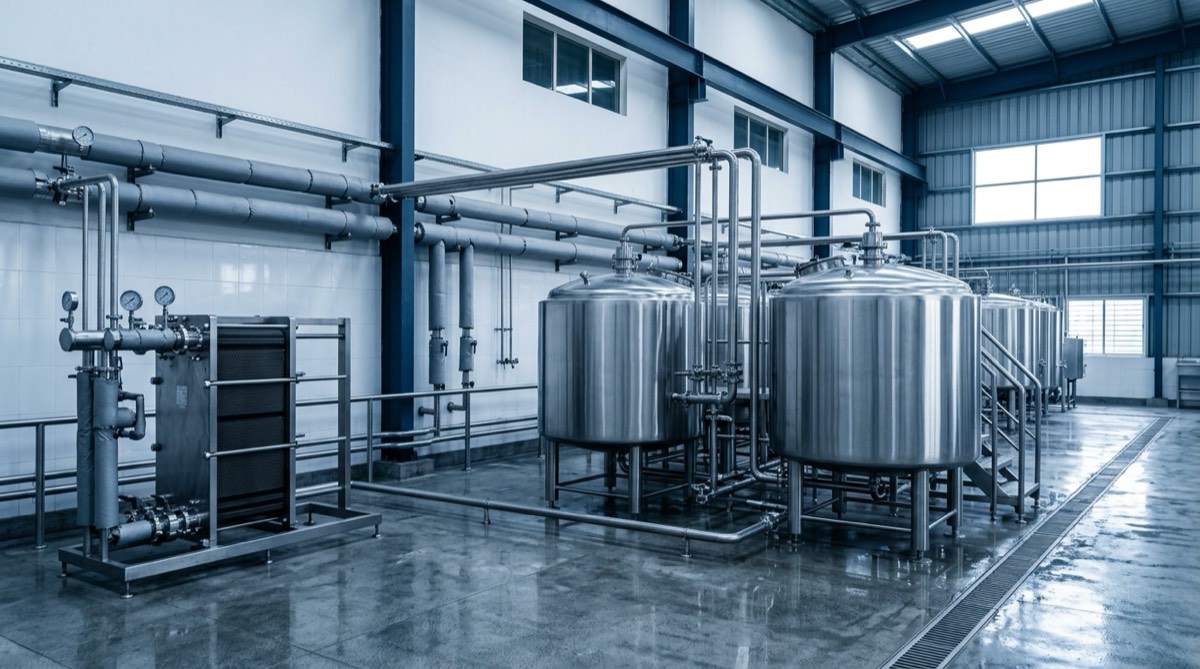
An Indian liquid milk dairy meets its pasteurisation and hot water demand from a 900 kW Tetra Heat Pump installation running with heat recovery. The heat pump does not heat milk: it raises the hot water loop feeding the plant’s existing plate heat exchanger, which in a dairy runs at 85 to 90°C while product is held at 72 to 75°C. The source is heat the plant was already rejecting. On the duty converted, this plant records a 75% energy saving. Tetra Heat Pump is a product of Promethean Energy Private Limited.
Which load did the heat pump take?
It took the loop rather than the product, and that distinction is what decides a dairy retrofit.
Pasteurisation is a product duty: HTST holds milk at 72 to 75°C and LTLT at 63°C. The heat pump sits one circuit away from that, raising hot water that drives heat across the plates of the existing exchanger. The loop runs hotter than the product setpoint, because an exchanger needs an approach temperature to move heat at all, and in a dairy it sits at 85 to 90°C. That figure sizes the machine.
The same loop carries clean-in-place caustic at 70 to 85°C, a short high-rate peak at the end of a run, and crate and tanker washing.
Where the heat came from
A dairy is the food and beverage processing plant where source and sink sit in one building: pasteurisation and refrigeration run at once, so the plant rejects condenser heat while paying to generate heat elsewhere.
This installation connects the two. The source is the rejected refrigeration heat, the sink is the hot water loop, and drawing on a warm water stream rather than ambient air shortens the compressor’s lift. That is this plant’s configuration, not a general specification: the stream must be close enough to pipe economically, its grade falls as heat is drawn from it, and it is gone when the refrigeration plant stops.
What was installed
| Item | This installation |
|---|---|
| Installed capacity | 900 kW |
| Configuration | Water source, running with heat recovery |
| Heat source | Refrigeration heat the plant was already rejecting |
| Sink | The hot water loop feeding the existing plate heat exchanger |
| Duties served | Pasteurisation feed and plant hot water |
| Product contact | None. The heat pump is one circuit away from product |
At 900 kW the duty is below the 1,450 kW single-machine ceiling and well below the 5 MW a multi-unit project reaches. Tetra Heat Pump water source units, built by Promethean Energy Private Limited, deliver continuous output up to 120°C with ±0.5°C control and use refrigerants including R1234ze and R245fa, so an 85 to 90°C loop sits inside the envelope with margin. Full specification is on the high temperature heat pump page.
The loop temperature also decides a licence: the Indian Boiler Regulations exemption applies below 100°C, so a loop at 85 to 90°C is not a registered boiler and needs no certified attendant on every shift.
Hygiene, HACCP and the product path
The objection that stops dairy projects is hygiene, and the answer is architectural. The heat pump makes hot water, and that water goes into the same plate heat exchanger and clean-in-place set the plant already runs. Product stays in the circuit it is in today, separated from the utility side by the exchanger surface the HACCP plan already covers, so the product path is unchanged and a quality manager can confirm it from the P&ID. The wetted material specification inside the hygienic boundary and the change record stay with the plant.
What stayed off the heat pump
This is a liquid milk plant, which is why the scope came out clean. A powder plant would not: spray dryer inlet air runs at 180 to 200°C, beyond the range of any industrial heat pump, so a drying train keeps its air heater whatever else moves. Retort sterilisation at 121°C is out too, on pressure as much as temperature.
What decides the saving on a dairy retrofit
Two things decide it: the fuel being displaced, and the temperature that the loop has to reach.
Tetra Heat Pump water source units reach COP 4.5 to 5.2 at 60°C output and performance falls as output climbs toward the 120°C ceiling, so an 85 to 90°C dairy loop is costed on the figure at that duty. Against PNG, LPG, furnace oil, light diesel oil and diesel, breakeven sits at a COP of 1.0 to 1.2, and the saving across those fuels runs at 40 to 70%.
Against solid fuel the answer changes. Many Indian dairies fire rice husk, firewood or coal, and there the reason to switch is compliance, air quality, labour and customer audit, not the fuel bill.
What the plant would do differently
Two things. Source proximity beats source size, because pumping and heat loss can leave a large condenser across the site worth less than a smaller stream beside the hot water plant. And meter the loop before the changeover, since the record either side of a retrofit cannot be rebuilt once the old plant is off.
Is your dairy a fit?
Start with the loop, not the pasteuriser: read the hot water supply temperature your plant runs, list what draws on that loop across a full clean-in-place cycle, and find how far the rejected streams sit from it. The ROI calculator shows where breakeven sits for your own duty. There is sector detail on the food and beverage page and other installations under case studies. To start with your own load list, get in touch.
Frequently asked questions
- Does the heat pump heat the milk?
- No. It heats a hot water loop, and that loop feeds the plate heat exchanger the dairy already runs. Product stays inside the circuit it is in today, so the product path is unchanged by the retrofit and the plant's HACCP position rests on the same exchanger surface it always did.
- What load does the heat pump actually serve on a dairy?
- The hot water loop, which in a dairy runs at 85 to 90°C, not the pasteurisation setpoint itself. HTST holds product at 72 to 75°C and LTLT at 63°C, and the loop has to run hotter than either because a plate heat exchanger needs an approach temperature to move heat across the plates.
- Where does the heat come from on this installation?
- The heat was recovered from the refrigeration plant that the dairy was already rejecting. An Indian dairy runs pasteurisation and refrigeration at the same time, so a warm rejected stream is available continuously while the plant is also paying to generate heat elsewhere. Drawing the source from that stream shortens the lift the compressor has to make.
- Can the same approach serve a milk powder plant?
- It cannot take the drying train. Spray dryer inlet air runs at 180 to 200°C, which is beyond the range of any industrial heat pump. A liquid milk plant is the clean fit; on a powder plant the honest scope is the hot water side and nothing past the dryer.
- Does a hot water loop at 85 to 90°C need boiler registration in India?
- No. The Indian Boiler Regulations exemption applies below 100°C, so a loop at 85 to 90°C is not a registered boiler. The certified attendant on every shift and the annual inspection shutdown go with the exemption.
Is your plant a fit?
The output temperature of the duty you want to move, the fuel you burn now and your landed electricity tariff decide it.