Heat pumps for pharmaceutical plants: HVAC reheat first, and the qualification question answered
The biggest heat pump opportunity in an Indian pharmaceutical plant is HVAC reheat after dehumidification. It is continuous, low grade, and outside the classified perimeter, which is also why it is the project that lands without touching a qualified utility. See the full heat pump specification →
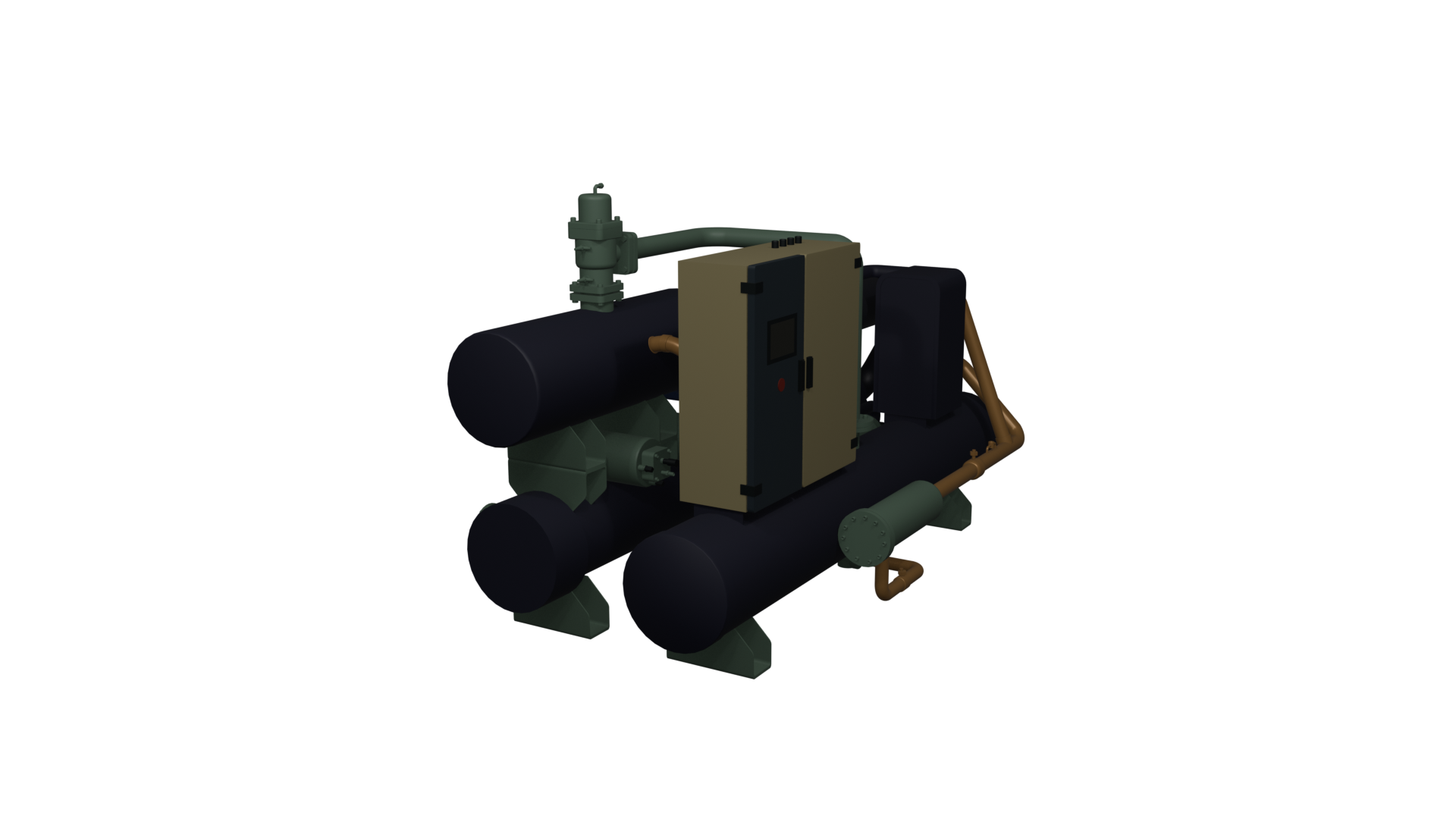
Applications
- →
HVAC reheat after dehumidification
The largest and most overlooked load in the plant, running continuously wherever air is dehumidified and reheated.
- →
Clean-in-place circuits
Hot water to 100°C, on the same circuit as the rest of the utility.
- →
Purified water and WFI loop sanitisation
80 to 95°C, which is sanitisation, not sterilisation.
- →
Fluid bed drying inlet air
60 to 80°C through a coil, well inside the range.
- →
API process heating
Aqueous duties with supply temperature held to ±0.5°C.
Industry Benefits
- HVAC reheat served continuously, the biggest load on the list
- CIP to 100°C and loop sanitisation at 80 to 95°C in range
- Precise temperature control (±0.5°C)
- 40 to 70% lower energy cost against PNG, furnace oil and LDO
- Certification obtained per project, to your GMP requirement
- First project lands outside the classified perimeter
Process temperatures
| Process | Temperature | Heat pump |
|---|---|---|
| HVAC reheat after dehumidification | Low grade, continuous | In range |
| Clean-in-place circuits | To 100°C | In range |
| Purified water and WFI loop sanitisation | 80 to 95°C | In range |
| Fluid bed drying | 60 to 80°C | In range |
| Sterilise-in-place and autoclave | 121 to 134°C pure steam | Not served |
| WFI multi-effect still | Plant steam, above the range | Not served |
The biggest heat pump opportunity in an Indian pharmaceutical plant is HVAC reheat after dehumidification, and it is the duty least often examined. Air is cooled to drop moisture and then reheated to the supply condition, continuously, wherever the plant is conditioned. Alongside it sit clean-in-place circuits to 100°C, purified water and WFI loop sanitisation at 80 to 95°C, and fluid bed drying at 60 to 80°C. Our Tetra Heat Pump units deliver continuous output to 120°C with precise temperature control (±0.5°C). That covers every one of those duties, and none of the steam ones. Sterilise-in-place and autoclave cycles at 121 to 134°C stay on pure steam.
Why HVAC reheat, ahead of process heat?
It is the largest continuous thermal load in a conditioned pharmaceutical plant, and it sits where a project is easiest to do.
The mechanism is simple and it is the reason the load is so large. To control humidity in a manufacturing area, air is cooled below its dew point so that moisture drops out. The air is then reheated to the temperature the space needs. Every kilowatt of that reheat is paid for twice: once to cool the air down and once to warm it back up. In a plant running that cycle across several air handling units, around the clock, the annual energy in reheat exceeds what most process duties consume.
It is also low grade. Reheat coils need warm water, not hot water. That means a small lift from source to output, and so the best coefficient of performance available in the building. A machine that is working hard to reach 95°C for a sanitisation loop is barely working to serve a reheat coil.
And the cooling side of the same air handling plant is rejecting heat at that moment. A water source machine takes its source from the chilled water return or the condenser rejection and delivers into the reheat circuit. That is the same simultaneous heating and cooling pattern that makes an automotive paint line suit this equipment.
Plant steam and pure steam are different utilities
Plant steam is a general services utility. It heats jackets, drives absorption plant, serves the boiler house distribution and does a dozen other things, and its specification is an engineering one. Pure steam is generated separately for duties that contact product or product-contact surfaces. It is qualified, monitored against its own specification, and governed by change control.
A heat pump can displace load on the first. It cannot generate the second. In most Indian plants, a meaningful share of the plant steam header is doing work below 100°C that never needed steam. That share is the project.
Sanitisation is not sterilisation
The two words describe different acceptance criteria and different equipment.
Sanitisation of a purified water or WFI distribution loop is a hot water duty at 80 to 95°C, held for a defined period. It is in range for a heat pump, and it is one of the better duties in the plant because it is predictable and scheduled.
Sterilisation means steam at pressure. Autoclave and sterilise-in-place cycles run at 121 to 134°C on pure steam, and a WFI multi-effect still needs plant steam above that. None of it is a heat pump duty.
Where does a first project land without touching a change control record?
It lands outside the classified perimeter, on a utility nobody has qualified.
This is the single most useful thing to get right in a pharmaceutical plant. The objection that stops these projects is rarely energy and almost always qualification. Touching a qualified utility opens a change control record, pulls in the validation team and can trigger requalification. The cost of that exercise far exceeds the saving on a first project.
There are three candidate landing sites, in the order they are usually easiest:
- HVAC reheat on a general manufacturing area. It is the largest load, and the reheat circuit is typically a services utility, not a qualified one.
- The plant steam header, upstream of any qualified branch. The heat pump displaces load below 100°C from a general services header.
- Utility hot water for washing, drum cleaning and general services, which sits well outside any classified area.
Land the first project in one of those, and run it for a season. Then bring the operating data to the conversation about anything inside the perimeter. That sequence turns a validation argument into an evidence argument, and it is the sequence a quality unit will recognise.
What that means practically is that the heat pump sits in the plant room and the interface is a water temperature. Nothing enters the product path, and nothing changes on the qualified side of the boundary. The P&ID your validation team reviews shows a different source of hot water feeding the same equipment.
What qualification documentation does a buyer need?
Your quality unit and your own validation policy decide that. We provide what your policy asks for, and we state which properties are standing properties of the equipment.
In practice a pharmaceutical buyer asks for four things:
- design documentation and a P&ID;
- factory and site acceptance test records;
- calibration certificates for the instruments that matter to the duty;
- material and surface finish specifications for anything inside a hygienic boundary.
A site or a customer audit may require the equipment itself to be certified. We then obtain that certification for the project, to the standard the site specifies, as we have on previous projects.
Certification is obtained per project, to your GMP requirement. It is not a blanket accreditation held by default.
What does an installed project look like?
The closest installation we have published is in an automotive plant, but the duty is the one a cleanroom has. A 600 kW Tetra Heat Pump holds that plant’s paint booths at 26°C and 60% RH, i.e. a fixed temperature and a fixed relative humidity, maintained for every hour the booths are in use. A cleanroom asks exactly this of its air handling, so the paint booth case study is the one to read if room climate is the load you are looking at.
Control matters more in this sector than the saving does. Our units hold supply temperature to ±0.5°C, and a process held that tightly is a process whose batch records get easier to defend. A utilities manager will often raise that before raising the energy bill.
Which fuel are you replacing?
Indian pharmaceutical plants run mostly on PNG, furnace oil and, in older sites, LDO. The arithmetic against all three is not close.
| Incumbent fuel | Price and date | Per useful kWh thermal | Breakeven COP | Verdict |
|---|---|---|---|---|
| PNG, Gujarat industrial | ₹68 per SCM, June 2026 | ₹7.24 | 1.17 | Wins comfortably |
| Furnace oil | ₹71.99 per kg, 1 August 2026 | ₹7.70 | 1.10 | Wins comfortably |
| Light diesel oil | ₹107.65 per litre, 1 August 2026 | ₹12.58 | 0.67 | Widest margin here |
| Electric resistance | ₹8.44 per kVAh, Maharashtra HT-I | ₹8.70 | Just under 1 | Wins by definition |
Breakeven COP is the efficiency at which the heat pump exactly matches the incumbent, computed at the Maharashtra HT-I energy charge. Above it, every point of COP is margin. On a reheat duty the lift is small, and the achievable COP is at the good end of the curve. That makes reheat the best economics in the building, as well as the largest load.
ADEETIE names pharmaceuticals among its 14 eligible sectors and runs to FY2027-28. It funds the investment-grade audit and the detailed project report. It also offers an interest subvention for MSMEs with a Udyam ID in a notified cluster. Check with the portal whether an industrial heat pump appears on its approved technology list. Do not assume that it does.
Working it out on your plant
Start with the reheat load, because it is the one nobody has metered. Count the air handling units that dehumidify and reheat, get the reheat coil duties off the schedules, and total them across the running hours. That number is usually larger than the people who own the energy budget expect.
Then list your hot water duties at the temperature each actually holds, and mark which of them sit inside a qualified boundary. The ones outside it are your first project.
The savings calculator puts a running cost against the result, and the sizing guide works the load arithmetic in full. The maintenance programmes cover what the machine needs once it is running. Chemical plants face a closely related set of duties and a different objection, set out on the chemical page. To start from your own utility list, get in touch.
Related industries
Chemical
Which chemical plant duties a heat pump serves. Aqueous reactor jackets to 88°C, reboilers 60 to 110°C, drying to 120°C, and sizing for a batch load.
Read the Chemical page →Food and Beverage
Five food processing duties a heat pump serves and three it does not. CIP at 70 to 85°C is usually what sizes the machine, not pasteurisation.
Read the Food and Beverage page →Technology Specifications
Output temperature, capacity and configuration for the industrial heat pump range.
View Specifications →System Integration
How a unit ties into the pipework, the controls and the plant you already run.
Learn About Integration →Maintenance & Support
Servicing, spares and support once the unit is running.
Explore Support Options →Frequently asked questions
- What is the biggest heat pump opportunity in a pharmaceutical plant?
- It is HVAC reheat after dehumidification. Air is cooled to drop moisture and then reheated to the supply condition, and that reheat runs continuously wherever the plant is conditioned. It is larger than the process heat load in most Indian plants and it is the duty least often examined.
- Is plant steam the same utility as pure steam?
- No. They are different utilities. Plant steam is a general services utility. Pure steam is generated for direct contact duties, is qualified, and carries its own specification and monitoring. A heat pump can displace load on the first and does not touch the second.
- Can a heat pump sterilise?
- It cannot. Sterilisation in a pharmaceutical plant means steam at pressure, at 121 to 134°C, in an autoclave or a sterilise-in-place cycle. What a heat pump supports is sanitisation of purified water and WFI loops at 80 to 95°C. That is a different duty, with a different acceptance criterion.
- Does installing a heat pump trigger requalification?
- It depends entirely on what it touches. A first project can sit outside the classified perimeter and feed a utility that is not qualified. Such a project generally does not open a change control record against a qualified system. Land the first project there, build the operating data, and treat anything inside the perimeter as a separate and later decision.
- What qualification documentation does a buyer need?
- It needs the documents your own validation policy calls for, which your quality unit decides. In practice a buyer asks for design documentation, factory and site acceptance test records, and calibration certificates for the instruments that matter. The buyer also asks for the material and surface specifications for anything inside a hygienic boundary. We obtain certification per project, to the standard your site requires.
Can a heat pump carry this duty in your plant?
Send us the output temperature, the flow or heat demand, the hours it runs and the fuel it burns today. Our engineers will size a unit against those figures and tell you which part of the load it can take and which part stays on the heating you run today.