Commercial water heater for hotels, hospitals and hostels: one central heat pump plant with storage
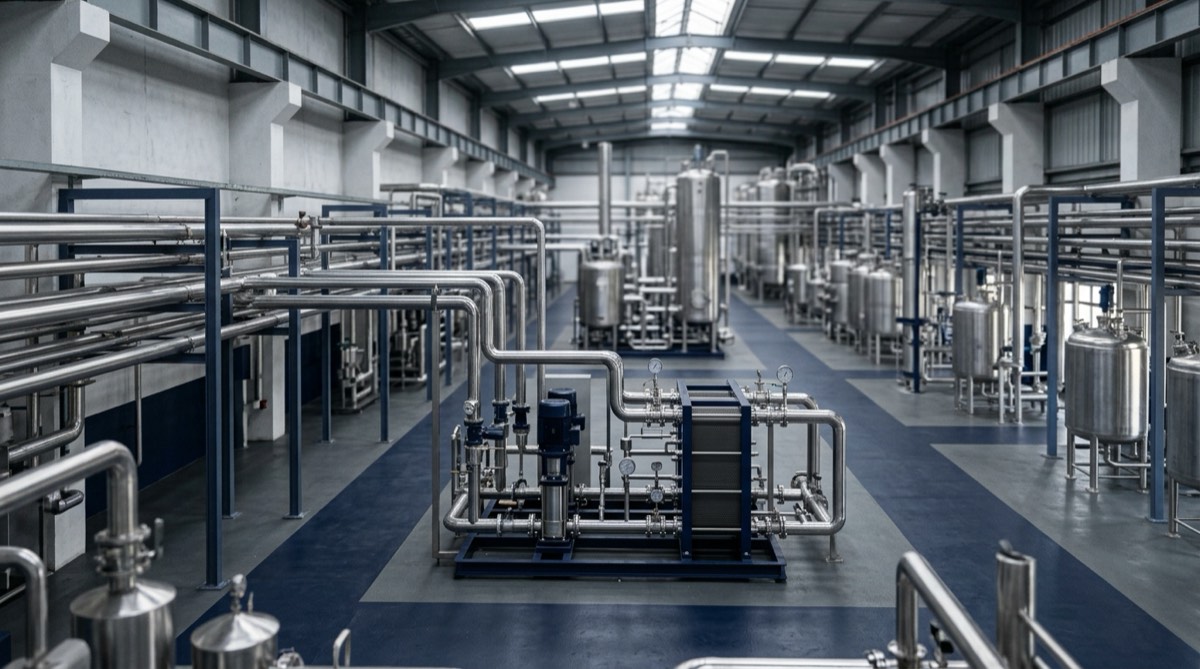
For a hotel, hospital, hostel or campus in India with a few hundred rooms or beds, the commercial water heater that costs least to run is one central heat pump plant with a hot water store. On the Maharashtra HT-I tariff a resistance geyser gives useful heat at approx. ₹8.70/kWh and a boiler on light diesel oil at approx. ₹12.58/kWh, whereas a heat pump at COP 3.5 gives the same kWh for approx. ₹2.41. Tetra Heat Pump, from Promethean Energy, builds that central machine in single units of up to 1,450 kW. One unit holds guest water, laundry and the dishwash rinse at their own set points with ±0.5°C control.
Send us your occupancy and twelve months of water heating bills, and our team will size the plant and the store for your building. You can share your details here.
What did a central heat pump plant do for a 200-room resort?
resort property in India, guest hot water, laundry and pool on the heat pump
reduction in heating cost on the converted duties
of CO2 avoided a year
A 200-room resort property in India moved its guest hot water, laundry and pool heating onto a Tetra Heat Pump system, and its heating cost on those duties came down by 70%. The installation also avoids 250 tonnes of CO2 a year. The kitchen stayed on its existing fuel, because cooking and tandoor heat are above what any heat pump can deliver. That boundary was settled at the site survey itself, well before the order.
The main design question on that property was the shape of the day. Guest draw is heavy before breakfast, falls to almost nothing by late morning and climbs again through the evening, while the laundry runs to its own schedule and the pool loses heat all day. Hence the stored volume was as much a sizing decision as the installed kilowatts. The store meets each peak and the machine refills it through the quiet hours, so it runs steadily without cycling at part load. The hotel case study sets out how that store was designed.
| Duty | Temperature | Suitable for a heat pump |
|---|---|---|
| Guest room and residence hot water | 45 to 70°C | Yes, with storage |
| Laundry main wash | 60 to 85°C | Yes |
| Kitchen dishwash sanitising rinse | Up to 82°C | Yes |
| Swimming pool and spa | 26 to 30°C | Yes, at the best COP in the building |
| Cooking and tandoor | Direct flame | No, stays on its present fuel |
Guest water and pool water are the cheapest heat in the building to make, because the lift is small. At 60°C output our water source units reach a COP of 4.5 to 5.2, and the figure comes down as the set point rises towards our 120°C ceiling. A hotel therefore gets more out of the same machine than a process plant running at 110°C. The resort's 70% is at the top of the 40 to 70% range our installations reach when they replace gas, LPG, furnace oil, LDO or diesel, and the low temperatures of hotel duties are what put it there.
What does a geyser bank cost to run against a central plant?
Packaged geysers are the right buy for a small building with one kind of demand. A guest house with only rooms and washbasins, no laundry and no plant room is well served by them, and any local plumber can replace a unit. Once a few hundred outlets draw in the same hour, or the laundry and kitchen share the hot water, a geyser bank's running cost grows with every room added and a central plant pays for itself.
| Heat source | Price | Cost per useful kWh of heat |
|---|---|---|
| Light diesel oil boiler | ₹107.65/litre, 1 August 2026 | ₹12.58 |
| Electric resistance geyser | ₹8.44/kVAh, Maharashtra HT-I | ₹8.70 |
| Heat pump, COP 2.5 | ₹8.44/kVAh, Maharashtra HT-I | ₹3.38 |
| Heat pump, COP 3.5 | ₹8.44/kVAh, Maharashtra HT-I | ₹2.41 |
Please note that the electricity rows use the Maharashtra HT-I industrial energy charge. A hotel or hospital on a commercial tariff pays a different rate, but the geyser and the heat pump run on the same electricity, so the gap between them holds on any tariff. The arithmetic takes 860 kcal to a kWh, resistance heating at 97% and an oil boiler at 80%, with light diesel oil at an indicative 10,700 kcal/kg. Against LDO a heat pump breaks even at a COP of 0.67 on this tariff, so any working machine wins by a wide margin. Our calculator runs the same comparison on your own tariff and fuel.
A central plant also does two things a geyser cannot. It can take its heat from a chiller or cold room that is already rejecting heat. It also runs from the BMS over Modbus or BACnet with the rest of the building, so your engineering team watches one machine and one store in one room.
What changes for a hospital, hostel or campus?
The duties are the same as the resort's. What changes is when the water is drawn, and that changes the store more than the machine.
Hospitals
A hospital draws round the clock, with the laundry and the kitchen running on fixed shifts, so its peak is flatter than a hotel's and the store can be smaller for the same daily volume. The stored water is held at the top of the 45 to 70°C band and blended down at the outlet, so that the tank does not become a breeding ground for Legionella. The laundry at 60 to 85°C and the kitchen rinse up to 82°C run off the same plant at their own set points. Sterilisers and autoclaves need steam at pressure, above our 120°C ceiling, so they stay on their own steam generator, and the heat pump takes every hot water duty off that boiler.
Hostels and student residences
A hostel or student residence has the sharpest peak of all, because a few hundred residents shower inside the same hour before classes. The daily volume can be modest while the peak is severe, hence the store does most of the work and the machine can be smaller than the room count suggests.
Campuses
A campus combines all of these, i.e. residences, a mess kitchen, a laundry and often a guest house, and one plant per cluster of buildings replaces a separate heater in every block.
How do we size the plant and the store?
The machine is sized on the day's heat and the store on the morning peak. A machine sized for the breakfast hour runs flat out for that hour and short-cycles for the rest of the day, so the extra kilowatts buy very little.
The day's water comes from your bills. Take the electricity or fuel your present heaters used in a month and convert it to useful heat, with one kWh counted as 860 kcal. Divide that by the temperature rise in °C, and since one kcal raises one litre of water by one degree, the answer is in litres. The store then has to cover the gap between what the building draws in its worst hours and what the machine makes in those hours, and the machine must refill the store before the evening peak.
Take a hotel whose geysers used 30,000 kWh in a month, heating water from 25°C to 60°C. At 97% that is 29,100 kWh of useful heat, about 970 kWh a day, or roughly 24,000 litres a day at a 35°C rise. A heat pump running about 20 hours a day needs to be about 50 kW. At COP 3.5 it uses about 8,300 kWh a month for the same water, i.e. approx. ₹70,000 a month on the HT-I energy charge against approx. ₹2.53 lakh for the geysers.
Now say a third of the day's water, 8,000 litres, goes out in the two breakfast hours. The 50 kW machine makes about 1,200 litres an hour at that rise, i.e. about 2,450 litres over the peak. The store therefore has to hold the remaining 5,500 litres or so as usable hot water. Refilling 5,500 litres through 35°C takes about 224 kWh, which is about four and a half hours at 50 kW, well inside the gap before the evening peak. Tall stores that keep the hot and cold layers apart give back more of their rated volume than short, wide ones, so the shape of the vessel matters as much as the litres.
Your own building will differ with its occupancy, its season and whether the laundry is in-house, and our sizing guide works through more cases. Send us your occupancy and your current bills for water heating, and we will size the plant and the store for you.
What happens to the electrical load?
A bank of resistance geysers adds its full rating to the connected load, and most of it is on together in the morning peak. The heat pump draws its duty divided by the COP, and the store spreads that draw across the day. The machine in the example gives 50 kW of heat for about 14 kW of electricity at COP 3.5. Our team checks the headroom against your sanctioned demand from twelve months of bills, and where an enhancement is needed, the process is set out in our article on sanctioned load.
Frequently asked questions
Which commercial water heater is best for a hotel in India?
Is a heat pump cheaper to run than an electric geyser?
How much hot water does a hotel or hospital use per day?
How much storage does a central hot water system need for the morning peak?
Can a heat pump supply a hospital's hot water?
What to send us so we can size your plant
- 1 Rooms or beds, and average occupancy in season and out of it.
- 2 Twelve months of bills for whatever heats the water today.
- 3 The laundry and kitchen schedule.
- 4 The cold water temperature at the coldest time of year.
- 5 Any chiller or cold room on site, with its rated capacity.
With those, our team will size the plant and the store for your building and tell you what it would cost to run. To run your own numbers first, use the calculator.