Heat pumps in textile wet processing: dye baths, washing and RO reject heating
Textile wet processing is mostly hot water below 100°C, which is where an industrial heat pump is strongest. Dye baths, wash stages and RO reject heating are in range. The stenter is out of range. See the full heat pump specification →
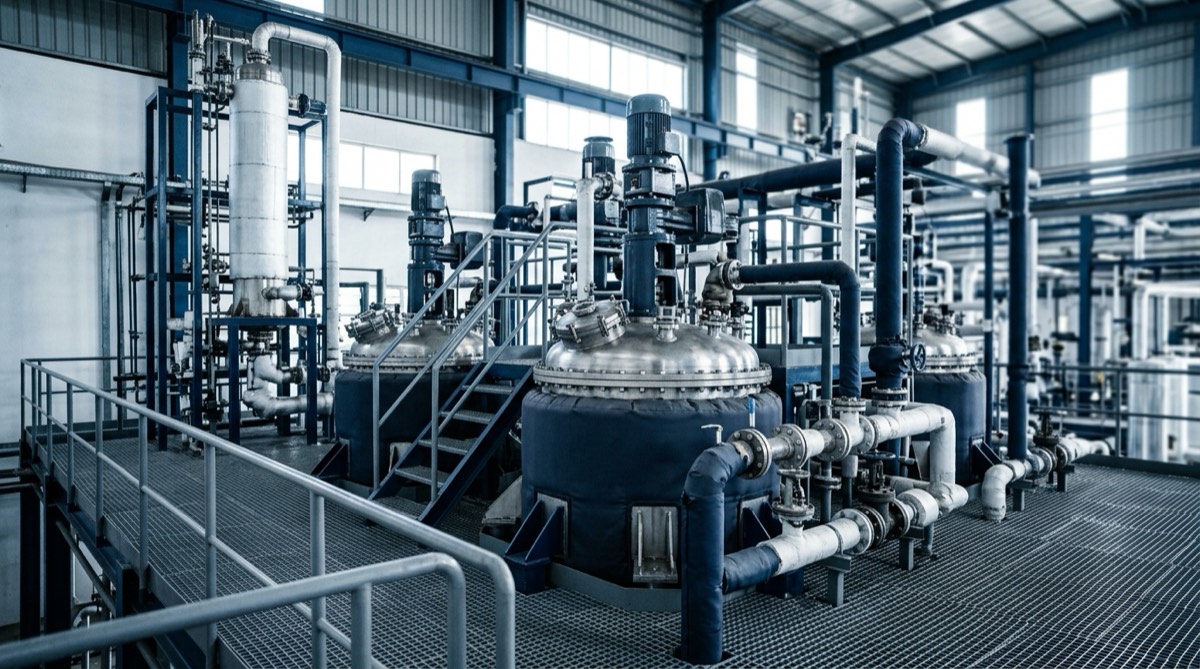
Applications
- →
Dye bath heating
The largest hot water demand in a wet processing unit, held through the cycle.
- →
Wash and rinse stages
Hot water between chemical stages, off the same circuit at a lower setpoint.
- →
RO reject and process water heating
Zero liquid discharge plants heat large volumes of reject, which is a steady in-range load.
- →
Hot effluent heat recovery
The dye house throws away hot water all day, and that is the heat pump's source.
- →
Bleaching and scouring liquor heating
Aqueous duties inside the band.
Industry Benefits
- Dye bath, wash and RO reject duties served at 60 to 95°C
- Hot dye-house effluent recovered as the heat source
- No stack, so no particulate emission from the heating plant
- Hot water below 100°C, outside the Indian Boiler Regulations
- Supply temperature held to ±0.5°C across the cycle
Process temperatures
| Process | Temperature | Heat pump |
|---|---|---|
| Dye bath | 60 to 95°C | In range |
| Wash and rinse stages | 60 to 95°C | In range |
| RO reject heating | Below 100°C | In range |
| Bleaching and scouring liquor | Below 100°C | In range |
| Stenter and drying range | 130 to 210°C | Not served |
Textile wet processing is mostly hot water below 100°C, which is exactly where an industrial heat pump works best. Dye baths, wash and rinse stages, and bleaching and scouring liquor all sit between 60 and 95°C. So does RO reject heating in a zero liquid discharge plant. Our Tetra Heat Pump units deliver continuous output to 120°C with ±0.5°C control. That covers every one of those duties.
The stenter does not sit in that band. It runs at 130 to 210°C and stays on the heater it has today.
What does textile wet processing actually need?
It needs two temperature bands, and almost nothing in between.
The wet end is aqueous and sits between 60 and 95°C. Dye baths are the largest single demand and are held through the cycle. Wash and rinse stages run off the same circuit at lower setpoints. Bleaching and scouring liquor are the same kind of duty. In a zero liquid discharge plant, heating RO reject is a further steady load. Most energy reviews miss it because they count it as an effluent cost, not a thermal one.
The dry end is the stenter and the drying range, at 130 to 210°C. That is above the ceiling by a wide margin.
So the project scope in a textile unit is the wet processing house.
Why the pressure requirement matters as much as the temperature
Some dyeing machines are designed around a steam supply, not around a temperature. They use the condensing behaviour of steam at a fixed saturation temperature, and the control philosophy is built on it. Whether those convert to a hot water loop depends on the machine.
Others simply need the liquor at a temperature, and the steam is there because the site has a header. Those convert cleanly.
Walk the machines and sort them into the two groups before anyone sizes a heat pump. A unit where most of the dyeing machines are in the second group is a strong project. A unit where they are in the first is a partial one, and it is better to know that at the survey than at commissioning. Which duties need steam works through the distinction in full.
What load does a dyeing unit present?
It presents a batch profile, and that decides how the machine is sized.
Dye cycles draw heat hard while the bath comes up to temperature. They draw much less while the bath is held, and nothing while the machine is unloaded and reloaded. Across a floor of machines those cycles overlap unpredictably. The plant sees a demand that swings between a high simultaneous peak and long quiet periods.
Sizing for the simultaneous peak buys a machine that spends most of the week at part load, where the coefficient of performance is worse. Sizing for the average leaves the floor waiting at shift start. The answer is buffer volume: size the machine on the base load, hold hot water in store, and let the store carry the peak.
Measure three things before sizing. All three come off your own plant:
- How many machines can come up to temperature at once on the worst shift. This is usually fewer than the machines you own.
- How long the heat-up phase lasts, against how long the hold phase lasts.
- What temperature the incoming water is at the coldest point of the year. The heat load depends on the rise.
The sizing guide turns those into a kilowatt figure and a buffer volume.
Hot effluent is the heat source
A dye house throws away hot water all day while paying to heat fresh water. That pairing is what makes the sector suit this equipment.
Effluent leaving a dye house carries heat that has already been bought once. A water source machine taking its source from that stream works across a shorter lift than one taking ambient air. So it delivers more heat per unit of electricity. In a plant with a heat recovery exchanger already fitted, the heat pump takes the grade the exchanger cannot.
Two engineering conditions apply. The stream carries solids and dye liquor. So the exchanger has to be cleanable, and the strainer regime has to be one that maintenance will follow. And the stream is intermittent in the same way the load is, so the source side benefits from the same buffering the sink side gets.
Walk the plant to find other sources. They include compressor aftercoolers, condensate return if the plant still runs steam, and the cooling side of any chilled water plant.
Which fuel are you replacing?
| Incumbent fuel | Price and date | Per useful kWh thermal | Breakeven COP | Verdict |
|---|---|---|---|---|
| PNG, Gujarat industrial | ₹68 per SCM, June 2026 | ₹7.24 | 1.17 | Wins comfortably |
| Furnace oil | ₹71.99 per kg, 1 August 2026 | ₹7.70 | 1.10 | Wins comfortably |
| Light diesel oil | ₹107.65 per litre, 1 August 2026 | ₹12.58 | 0.67 | Widest margin here |
| Biomass briquette | about ₹8,500 per tonne, 2026 | ₹2.54 | 3.33 | Close. Cost is not the argument |
| Coal, delivered | ₹6,000 per tonne | ₹1.94 | 4.35 | Heat pump loses on running cost |
The middle column is our own arithmetic. It takes 1 kWh as 860 kcal and gas at 9,500 kcal per SCM. Furnace oil is 10,050 kcal per kg and coal is 3,800 kcal per kg. A gas boiler is taken as 85% efficient, oil as 80% and solid fuel as 70 to 72%. Light diesel oil and briquette calorific values are indicative.
A large share of Indian textile processing runs on solid fuel. Against delivered coal a heat pump is about 24% dearer to run. Against briquette the margin is 5%, which will not survive a bad month. So for a unit on solid fuel, the decision rests on compliance, air quality and customer audits. The full cost-of-heat arithmetic is here.
What compliance obligations does a processor carry?
Textile processing is one of the most regulated thermal loads in Indian industry. In several clusters the fuel question is already decided for the unit, not by it.
Across NCR, coal has been banned since 1 January 2023, along with pet coke, furnace oil, LDO and naphtha. Biomass cannot meet the 50 mg/Nm³ particulate limit that applies there.
The approved fuel list does include natural gas and LPG alongside electricity. So the compliant route out of coal is usually a gas conversion, and a heat pump competes against that. What a heat pump adds to that comparison is that it has no stack at all, and no ongoing exposure to a fuel price. The dyeing cluster page covers what that has meant in Panipat and Sonipat.
Outside NCR the position varies by state, and only a minority have formally notified approved fuel lists. The practical instruction is the same everywhere. Get the current direction that applies to your unit in writing before you choose a fuel. The position is moving, and a conversion is a ten-year decision.
Effluent is the other obligation, and it interacts with the heating one. A zero liquid discharge plant has a larger thermal load than a conventional one, because heating RO reject is part of the treatment. That load is in range, so a ZLD unit is often a better heat pump project than a conventional one.
Where a heat pump is the wrong answer here
The stenter comes first. At 130 to 210°C it is out of range, and no engineering closes the gap.
Any dyeing machine that needs saturated steam at pressure is out, where a liquor temperature is not enough. Check that machine by machine.
A unit running a short seasonal campaign will not repay the machine, because capital equipment earns its return on running hours.
A unit on solid fuel deciding purely on fuel cost should not switch, because the arithmetic above does not support it.
Working it out on your plant
Split the fuel bill between the wet house and the stenter. The wet house share is what a heat pump project applies to, and on most units it is a larger share than the plant expects.
Then sort the dyeing machines into those that need steam and those that need a temperature. Then measure the hot effluent stream: flow, temperature and how steadily it runs.
With those three, the calculator will show where breakeven lands on your tariff. The full temperature envelope sets out what the equipment delivers and where it stops, and the chemical page covers the closely related aqueous batch duties. To start from your own machine list, get in touch.
Related industries
Chemical
Which chemical plant duties a heat pump serves. Aqueous reactor jackets to 88°C, reboilers 60 to 110°C, drying to 120°C, and sizing for a batch load.
Read the Chemical page →Dairy
Heat pumps for the 85 to 90°C pasteuriser hot water loop and CIP in Indian dairies, using heat the refrigeration plant already rejects.
Read the Dairy page →Technology Specifications
Output temperature, capacity and configuration for the industrial heat pump range.
View Specifications →System Integration
How a unit ties into the pipework, the controls and the plant you already run.
Learn About Integration →Maintenance & Support
Servicing, spares and support once the unit is running.
Explore Support Options →Frequently asked questions
- Can a heat pump heat a stenter?
- It cannot. A stenter runs at 130 to 210°C, above the 120°C ceiling of an industrial heat pump, and it stays on the heater it has today. Settle this in the first conversation.
- Which textile duties does a heat pump actually serve?
- It serves the wet processing duties: dye baths, wash and rinse stages, and bleaching and scouring liquor. In a zero liquid discharge plant it also heats RO reject. All of them sit between 60 and 95°C. That is a comfortable part of the range, below the ceiling.
- Why does the pressure requirement matter as much as the temperature?
- A duty that needs saturated steam at pressure needs steam itself. Some dyeing machines are designed around a steam supply and its condensing behaviour. Check whether each duty needs the pressure or only the heat. A duty that needs only the heat converts to a hot water loop, and one that needs the pressure does not.
- Is hot effluent really usable as a heat source?
- Yes, and in a dye house it is usually the best source available. The plant rejects hot water at the same time as it pays to heat fresh water. It needs a cleanable exchanger and a strainer regime that maintenance will follow, since the stream carries solids and dye liquor.
- Does a heat pump help with the fuel rules in NCR?
- It removes the stack, which is what biomass cannot do at the 50 mg/Nm³ particulate limit. But the approved fuel list for NCR includes natural gas and LPG. So the compliant path out of coal there is usually to gas. A heat pump therefore competes against a gas conversion, not against coal.
Send us your load profile
The next step is a load profile rather than a quotation.
Start a scoping conversation