Heat Pump Water Heater for Industries: Complete Guide
Key Takeaway: Industrial heat pump water heaters deliver hot water up to 95°C while using 50-70% less energy than conventional boilers. This guide covers everything you need to know about selecting, sizing, and implementing heat pump water heating for your facility.
If your facility uses boilers, electric heaters, or solar thermal systems for hot water, you're likely paying more than necessary. Industrial heat pump water heaters have emerged as the most energy-efficient solution for generating hot water in manufacturing, processing, and commercial facilities. This comprehensive guide explains how they work, which applications they're suited for, and how to evaluate them for your operation.
What This Guide Covers
- Technology: How industrial heat pump water heaters work
- Temperature Capabilities: What temperatures can be achieved (up to 95°C)
- Applications: Industry-specific hot water requirements
- Comparisons: Heat pump vs boiler vs solar water heater
- Sizing: How to calculate the right capacity
- Economics: ROI and payback calculations
What is an Industrial Heat Pump Water Heater?
An industrial heat pump water heater uses the same principle as your refrigerator — but in reverse. Instead of removing heat from inside a box, it extracts heat from ambient air (or water) and transfers it to your process water. For a deeper understanding of the technology, see our guide to heat pump fundamentals.
The key difference from residential units is scale and capability:
| Feature | Residential Heat Pump | Industrial Heat Pump |
|---|---|---|
| Capacity | 2-5 kW | 10 kW - 5 MW |
| Max Temperature | 55-60°C | 90-95°C |
| Water Output | 150-300 L/day | 1,000 - 500,000+ L/day |
| COP Range | 2.5-3.5 | 3.0-4.5+ |
| Heat Source | Ambient air | Air, water, waste heat, ground |
Industrial systems can also be air-source or water-source, with water-source units achieving higher efficiencies when a suitable water source is available.
Temperature Capabilities: What Can Heat Pumps Achieve?
One of the most common questions is whether heat pumps can deliver the temperatures required for industrial processes. The answer is yes — modern industrial heat pumps comfortably achieve 90-95°C, covering the vast majority of hot water applications.
Tetra Heat Pump Temperature Capabilities
- Standard Range: 50-80°C — Suitable for most process water, washing, preheating
- High-Temperature Range: 80-95°C — CIP final rinse, pasteurization, sterilization
- COP at 80°C: Typically 3.0-3.5 (still 3x more efficient than electric heating)
Higher temperatures are possible with specialized high-temperature heat pumps using CO2 refrigerant
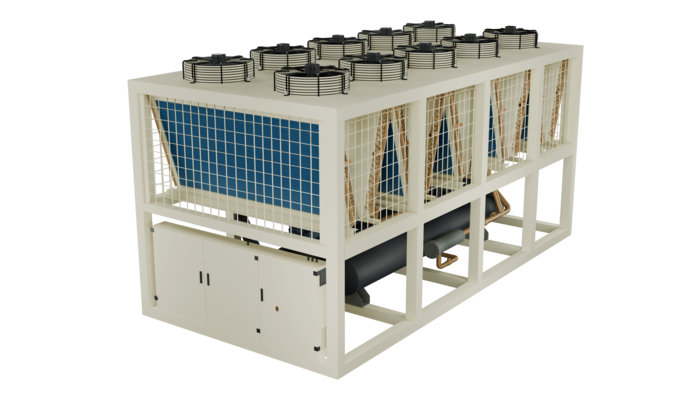
Industrial Applications: Hot Water Requirements by Industry
Different industries have different hot water temperature and volume requirements. Here's a comprehensive breakdown:
Food & Beverage Industry
The food and beverage sector is one of the largest consumers of hot water in manufacturing. Key applications include:
Food & Beverage Temperature Requirements
| Application | Temperature | Heat Pump Suitable? |
|---|---|---|
| CIP Pre-rinse | 32-43°C (90-110°F) | Yes |
| CIP Detergent Wash | 60-80°C (140-176°F) | Yes |
| CIP Final Rinse/Sterilization | 85-95°C (185-203°F) | Yes |
| Pasteurization | 72-85°C (161-185°F) | Yes |
| Bottle Washing | 60-80°C (140-176°F) | Yes |
Pharmaceutical Industry
The pharmaceutical sector requires precise temperature control and compliance with GMP standards:
Pharmaceutical Temperature Requirements
| Application | Temperature | Heat Pump Suitable? |
|---|---|---|
| Process Water Heating | 60-80°C | Yes |
| Clean Room HVAC | 15-25°C | Yes |
| API Processing | 40-90°C | Yes |
| WFI Pre-heating | 80-90°C | Yes |
Hospitality Industry
Hotels, resorts, and hospitals have consistent, high-volume hot water demand. The hospitality sector sees some of the fastest ROI with heat pump water heaters:
- Guest Hot Water: 55-60°C — High volume, consistent demand
- Commercial Laundry: 60-85°C — One of the largest energy consumers
- Swimming Pool Heating: 26-30°C — Ideal for heat pumps (high COP at low temperatures)
- Commercial Kitchen: 60-82°C — Dishwashing and sanitization
Automotive & Manufacturing
The automotive sector uses hot water extensively in paint shops and component washing:
- Paint Shop Processes: 40-80°C — Phosphating, electrocoating, drying
- Parts Washing: 50-70°C — Degreasing and cleaning
- Surface Treatment: 60-90°C — Pre-treatment baths
Chemical Processing
The chemical industry benefits from heat pumps for reactor heating, distillation, and tank heating — all within the 60-95°C range.
Heat Pump vs Boiler vs Solar: Which is Best?
Let's compare the three main options for industrial hot water generation. For detailed cost analysis, see our heat pump vs boiler cost comparison.
| Factor | Heat Pump | Gas/Diesel Boiler | Solar Thermal |
|---|---|---|---|
| Energy Efficiency | 300-450% (COP 3-4.5) | 80-95% | 60-80% |
| Operating Cost | Lowest | Highest (fuel prices) | Very Low (after install) |
| Capital Cost | Medium-High | Low-Medium | High (large installations) |
| Space Required | Moderate | Low | Very High (roof area) |
| Weather Dependent? | No (works in all conditions) | No | Yes (needs backup) |
| Max Temperature | 90-95°C | Steam possible | 60-80°C typical |
| Carbon Footprint | Low (zero if renewable electricity) | High | Very Low |
| Payback Period | 18-36 months | Baseline | 4-7 years |
Key Insight: Heat pump water heaters equivalent to 7 solar panels in energy savings, yet cost approximately 1/6th the price. For industrial applications requiring consistent high-temperature hot water, heat pumps offer the best combination of reliability, efficiency, and ROI.
How to Size an Industrial Heat Pump Water Heater
Proper sizing ensures you get optimal efficiency without over-investing. Here's the basic approach:
Step 1: Calculate Heat Load
Heat Load Formula
Heat Load (kW) = Flow Rate (L/hr) × ΔT (°C) × 1.163 ÷ 1000
Where ΔT = Outlet Temperature - Inlet Temperature
Example: A dairy plant needs 5,000 liters/hour of hot water at 80°C. Inlet water is 25°C.
Calculation Example
- Flow Rate: 5,000 L/hr
- Temperature Rise (ΔT): 80°C - 25°C = 55°C
- Heat Load: 5,000 × 55 × 1.163 ÷ 1000 = 320 kW
This dairy would need approximately a 350 kW heat pump system (with some margin for peak demand).
Step 2: Consider Storage Requirements
Unlike boilers that can rapidly increase output, heat pumps work best at steady-state operation. Adequate storage tanks help manage peak demand:
- Buffer Storage: Generally 1-2 hours of peak demand capacity
- Oversizing Benefit: Larger tanks reduce reliance on backup electric heating
- Stratification: Industrial tanks use stratification to maintain hot water at top while cold water enters at bottom
Step 3: Select Heat Source Type
- Air-Source: Most common, works in all climates, COP 3.0-4.0
- Water-Source: Higher efficiency (COP 4.0-5.0) if cooling tower or process water available
- Waste Heat Recovery: Highest efficiency if waste heat stream exists (from chillers, compressors, etc.)
Use our free ROI calculator to estimate sizing and savings for your specific application.
Installation Requirements
Industrial heat pump water heaters have specific installation requirements to ensure optimal performance:
Key Installation Considerations
- Space: Allow 18-24 inches clearance on sides and 12+ inches from walls for airflow (air-source units)
- Ambient Temperature: Air-source units perform best in 10-45°C ambient; below 5°C, efficiency drops significantly
- Electrical Supply: Three-phase power typically required for industrial units; verify capacity with your electrician
- Water Quality: Water-source units require clean water; high mineral content may need treatment
- Noise Levels: Consider placement relative to work areas; industrial units are quieter than you might expect (typically 55-70 dB)
- Integration: Plan for integration with existing hot water piping, controls, and BMS systems
Learn more about our system integration services and ongoing support options.
Economics: ROI and Payback
Heat pump water heaters deliver compelling economics. Here's a realistic example:
ROI Example: 200 kW System Replacing Diesel Boiler
| Heat Pump Capacity | 200 kW |
| Operating Hours/Year | 4,000 hours |
| Annual Heat Output | 800,000 kWh |
| Previous Diesel Cost | Rs. 72,00,000/year |
| Heat Pump Electricity Cost (COP 3.5) | Rs. 20,00,000/year |
| Annual Savings | Rs. 52,00,000 |
| Capital Investment | Rs. 85,00,000 |
| Simple Payback | ~20 months |
Based on diesel at Rs. 90/liter, electricity at Rs. 8/kWh
This doesn't include additional benefits like government incentives and subsidies which can further reduce payback to under 18 months. For a detailed financial analysis methodology, see our ROI calculator guide.
Frequently Asked Questions
What temperature can industrial heat pump water heaters achieve?
Modern industrial heat pump water heaters can achieve temperatures up to 90-95°C (194-203°F), which covers most industrial hot water requirements including pasteurization, CIP cleaning, and process heating. High-temperature models using R744 (CO2) refrigerant can reach even higher temperatures.
How much can I save by switching from a boiler to a heat pump water heater?
Industrial heat pump water heaters typically deliver 50-70% energy cost savings compared to gas/diesel boilers. With a COP (Coefficient of Performance) of 3-4.5, heat pumps produce 3-4.5 units of heat for every unit of electricity consumed, compared to boilers which operate at 80-90% efficiency at best.
Is a heat pump water heater better than solar water heating for industries?
Heat pump water heaters offer more consistent output regardless of weather conditions, require less space than solar thermal systems, and can achieve higher temperatures reliably. Solar thermal requires large roof areas and backup systems for cloudy days. For industrial applications requiring consistent high-temperature hot water, heat pumps are generally the more practical choice.
Do heat pumps work in cold climates?
Yes, but efficiency decreases as ambient temperature drops below 10°C. In India, this is rarely a concern. For locations with cold winters, water-source heat pumps or waste heat recovery configurations maintain high efficiency year-round. Most industrial facilities also have internal heat sources that can be utilized.
Can I retrofit a heat pump to my existing hot water system?
Yes, heat pumps can typically be integrated with existing hot water infrastructure. They can work alongside existing boilers in a hybrid configuration, allowing you to phase out boiler usage gradually. Our integration team specializes in retrofit projects.
Summary: Is a Heat Pump Water Heater Right for Your Facility?
A heat pump water heater is likely a good fit if:
Ideal Candidates for Heat Pump Water Heaters
- Your hot water demand is at or below 95°C
- You currently use boilers (gas, diesel, LPG) or electric heaters
- You have consistent hot water demand (4,000+ hours/year)
- Energy costs are a significant portion of operating expenses
- You have decarbonization or sustainability targets
- You want to take advantage of government incentives
Related Resources
- Understanding Heat Pumps: The Fundamentals
- Air Source vs Water Source Heat Pumps
- Heat Pump vs Boiler: 70% Cost Savings Explained
- Government Incentives for Heat Pumps in India
- Free ROI Calculator
Ready to Explore Heat Pump Water Heating?
Get a customized assessment for your facility. Our team will analyze your hot water requirements and provide a detailed proposal with ROI projections.
Sources: Temperature and efficiency data referenced from U.S. Department of Energy, ENERGY STAR, Tetra Pak Dairy Processing Handbook, and industry research.